Leaving Survival Mode: Transitioning From “Just Getting Through the Day” to Living With Intention
For many women in midlife, the phrase “how are you?” is often met with a tired smile and a standard response: “I’m just keeping my head above water.” While this might sound like a casual figure of speech, for the woman aged 40 to 60, it is often a literal description of her internal state. She is living in Survival Mode.
Survival Mode is a psychological and physiological state where your brain and body are stuck in a cycle of “fight, flight, or freeze.” It is the mental exhaustion of a long-term caregiver, the hyper-vigilance of someone navigating an unstable career, or the quiet depletion that follows a major health battle.
In this state, the goal isn’t to thrive, to dream, or to create, it is simply to reach the pillow at the end of the day.
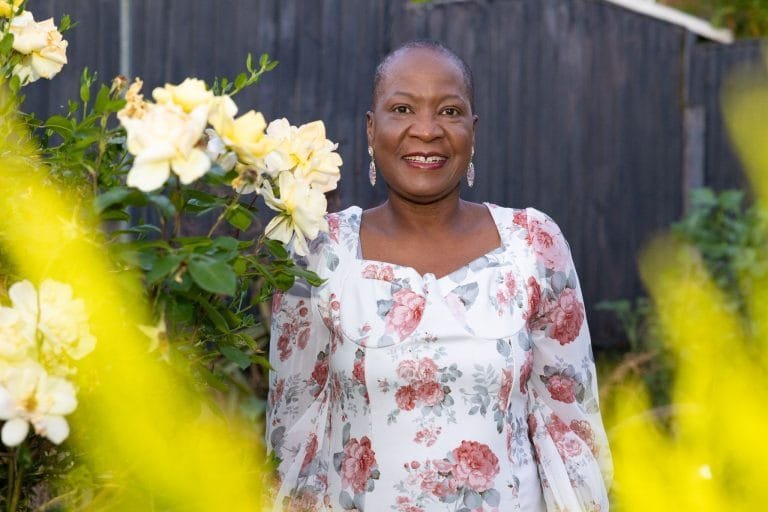
Rujeko Oscars-Brown understands this exhaustion at a structural level. During her 20 years of navigating life as an undocumented migrant, survival wasn’t a choice; it was a full-time job.
But she also knows the profound cost of staying in that mode once the immediate crisis has passed. Transitioning into living with intention is the essential work of midlife reinvention.
The Anatomy of the “Survival Trap”
Survival Mode is designed to be a temporary bridge to get us through a crisis. However, for many women, the bridge becomes their permanent home. When you have faced prolonged stress, whether it is financial instability, the high-wire act of solo parenting, or surviving cancer, your nervous system becomes “wired” for catastrophe.
In Survival Mode, your focus is narrow. You lose the ability to think long-term because your brain is prioritizing the next fifteen minutes.
- The Symptom: You feel “busy” but not “productive.”
- The Cost: Your creativity, your joy, and your sense of identity are sacrificed to maintain the status quo.
- The Result: You look back at a year and realized you didn’t live it; you merely managed it.
Rujeko describes this as being an architect who is so busy fixing leaks in the roof that they never look at the original blueprints of the house. You are reacting to the world, rather than responding to your own purpose.
Deactivating the “Threat Response”
The first step in leaving Survival Mode is acknowledging that your “safety systems” are still running, even if the “threat” has diminished. To move toward Intentionality, we must first calm the internal alarm.
Rujeko’s approach is trauma-informed, meaning she recognizes that you cannot simply “will” yourself out of exhaustion. You have to signal to your body and mind that it is finally safe to exhale.
1. Grounding: Finding the “Now”
In survival mode, your mind is either in the past (processing what went wrong) or in the future (worrying about what might). Grounding techniques bring you back to the present.
Rujeko encourages women to practice sensory grounding, noting the weight of their feet on the floor or the rhythm of their breath. This signals to the nervous system: “I am here. I am safe. The crisis of yesterday is not the reality of today.”
2. The Biblical Anchor of Presence
When we are overwhelmed by the “doing” of life, we often feel abandoned by our own strength. Isaiah 41:10 offers the ultimate grounding tool: “So do not fear, for I am with you; do not be dismayed, for I am your God.
I will strengthen you and help you…” Leaving survival mode requires a shift in trust. Instead of trusting in your own ability to “hustle,” you begin to trust that you are being “upheld” by a higher hand. This allows you to lower your guard and begin to see possibilities again.
From “Managing” to “Architecting”
Once the nervous system begins to settle, the transition to Living with Intention can begin. This is the shift from being a “Manager” to being an “Architect.” A manager deals with what is on the desk; an architect decides what the desk should look like and where the house should stand.
Rujeko’s framework for intentional living involves three core shifts:
Shift One: Choosing Over Reacting
Intentionality starts with the word “no.” In survival mode, we say “yes” to everything because we are afraid of the consequences of stopping. Living with intention means auditing your commitments. Ask yourself: “Am I doing this because it aligns with who I am becoming, or am I doing it to keep the peace?”
Shift Two: The “Experimentation” Phase
Survival Mode leaves little room for hobbies or play. Transitioning out of it requires what Rujeko calls “Identity Experiments.” Try something new—a painting class, a new professional certification, or even a different morning routine.
These aren’t meant to be “mastered”; they are meant to prove to yourself that you have the freedom to choose your own experiences again.
Shift Three: Building the “Third Act”
For women aged 40–60, this is the season of Purposeful Reinvention. Intentional living asks: “If I am no longer just ‘getting through,’ what am I going toward?” This might mean a career pivot that prioritizes your peace over your title, or it might mean redefining your boundaries with family to ensure your own “well” isn’t dry.
The Restoration of the Self
Leaving Survival Mode isn’t just about feeling better; it is about Restoration. When you stop merely surviving, you begin to reclaim the parts of yourself that you had to suppress to stay safe. You rediscover your wit, your passions, and your quiet authority.
Rujeko knows that this transition can feel like a “Identity Gap.” You might feel guilty for wanting more than just “getting by,” or you might feel unqualified to dream again. But remember: the strength you used to survive is the exact same strength you will use to thrive. You have already proven you are resilient; now, it is time to use that resilience for your own joy.
Taking the First Step
If you are tired of “just getting through the day,” know that there is a path toward a more intentional, restorative way of living. You don’t have to stay on the “bridge of survival” forever. The second half of your life is an opportunity to rebuild based on your values, your faith, and your true identity.
The transition from survival to intention is rarely a solo journey. It requires a safe space to decompress and a strategic plan to move forward. Rujeko Oscars-Brown is committed to walking beside women as they navigate this precise shift.
Whether you are seeking to reinvent your career, find confidence after a life-altering illness, or simply stop feeling “invisible” in your own life, the process starts with a single conversation.
Book a Free Discovery Call with Rujeko today to explore how her programs can help you deactivate your survival response and start architecting a life lived with purpose. You have done the hard work of surviving; now, let us do the beautiful work of living.